Outfield Enemy and Hunter Guide
It cannot see you — but it hears every mistake you make.
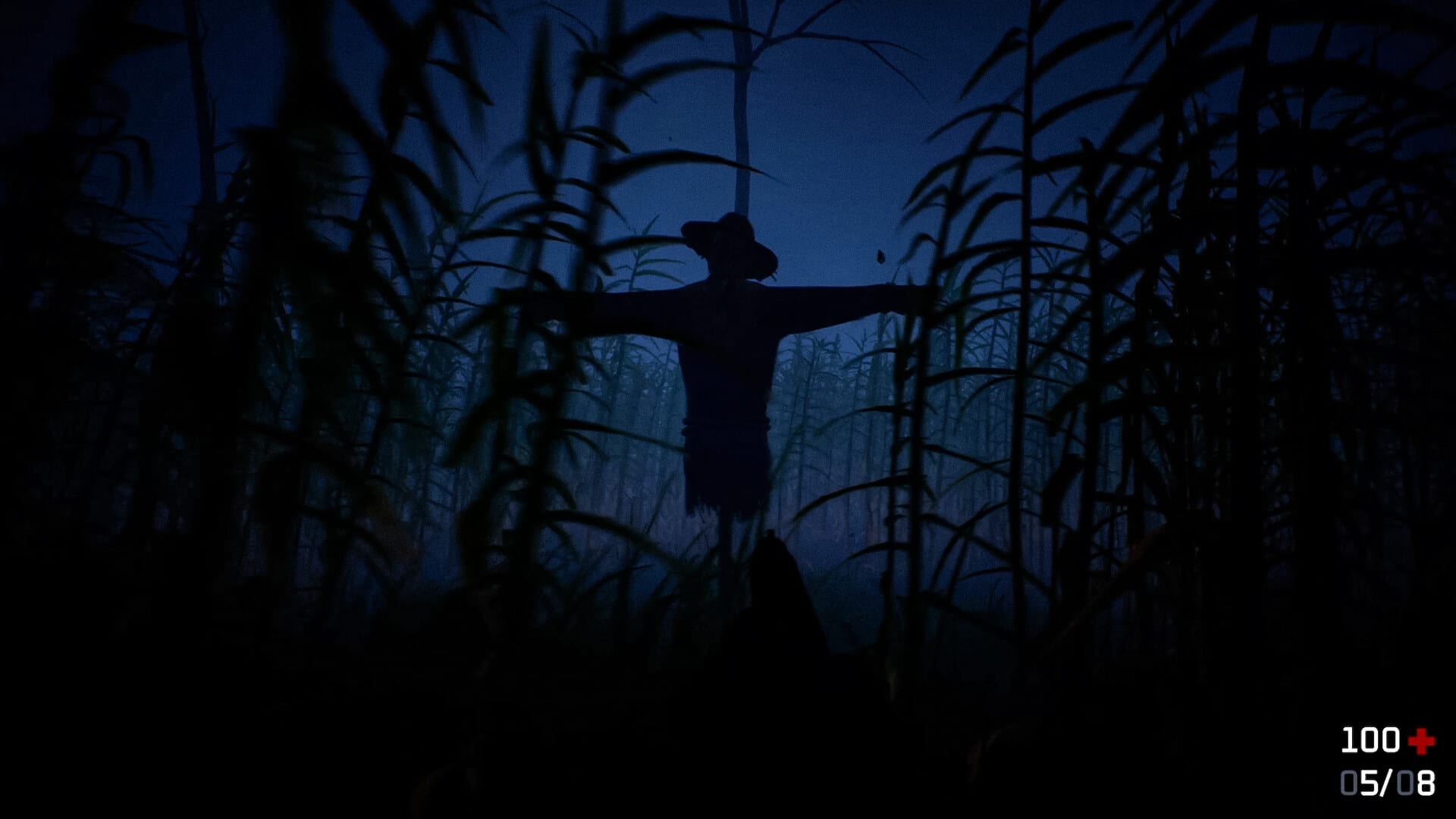
Outfield’s central horror is an unseen hunter that tracks you primarily through sound, not line-of-sight. Store copy states plainly: “It can’t see you. It hears you.” Every footstep, reload, and scarecrow break feeds information that lets the predator close distance and end your run. This guide explains how that threat behaves across a single attempt, how it escalates over time, and how to read pressure signals without spoiling story discoveries hidden in the field.
Read Stealth and Sound for movement discipline and Getting Started if you have not finished a first run. On launch day (July 29, 2026), treat hunter behavior as live-build truth — verify any community claims against your own headphones and check Patch Notes when Mathis Debaussart ships hotfixes.
What the hunter is (mechanically)
Public materials describe a single antagonist that:
- Locates you via audio cues — footsteps, gunfire, reloads, and loud environmental interactions
- Evolves within a run — becoming faster, more aggressive, and less predictable the longer you survive
- Punishes repeated patterns — farming the same scarecrow lane quietly at minute five may fail at minute fifteen
The hunter is not a horde shooter enemy. You will not clear a room of adds. You manage one persistent pressure source whose response tightens as your XP curve rises. That design pairs with Scarecrow and XP routing: every milestone makes you stronger but also keeps the clock running on escalation.
Sound detection in practice
Think of noise as broadcasting a radius rather than triggering instant death:
Footsteps scale with movement speed and surface wetness. Walking is the default; sprinting is a deliberate gamble. Rain may shrink how far footsteps travel — see Day/Night and Weather — but never assume silence.
Gunfire is a high-confidence blip. You carry one gun with limited ammo; each shot tells the hunter where to investigate. Emergency shots create space at the cost of future safety.
Scarecrow destruction is the loudest intentional event in the core loop. Breaking one without an exit plan is the most common rookie mistake after sprint spam.
Reloading counts. Open-field reloads during night phases combine bad vision with fresh audio — a frequent death cause noted in Stealth and Sound.
Calibrate volume using Audio Settings so footstep feedback is audible without clipping. Misconfigured sliders make the hunter feel unfair even when detection works as designed.
Escalation timeline within one run
Steam feature bullets emphasize evolution over time. Expect three informal phases even if the game does not label them in UI:
Early run (learning window): The hunter may feel slower or farther away while you learn grass lanes. Use this phase to map landmarks and test rain masking — not to greed every scarecrow on the map.
Mid run (pressure rises): Response times shorten after repeated noise events. If encounters happen soon after re-entering a cleared sector, rotate routes instead of farming the same pocket.
Late run (record chase): Aggression and unpredictability peak. Upgrade choices that help kiting or noise mitigation matter most here — compare Best Upgrades once launch data exists.
Death in late phase still teaches routing lessons. Note the last sound you made before contact; most players discover reload or double-scarecrow chains as the culprit.
Vision vs audio: what tall grass changes
Tall grass breaks visual sightlines. You can feel hidden while still being audible. Night further reduces vision, shifting priority to ears — the same hunter rules apply, but your information deficit grows.
Do not confuse “I cannot see it” with “it cannot find me.” Crouch and slow movement help both systems, yet only audio discipline keeps you alive when the hunter is outside your cone of view.
Weather and time modifiers
Rain masks sound according to official descriptions. Practically, rain windows allow bolder repositioning or justified scarecrow breaks, but gunshots may still cut through. Night shrinks vision without turning off hearing. Combined rain-and-night sectors are the highest-risk farming zones — plan one objective, then leave.
Patch notes may adjust these values post-launch. When Updates documents audio changes, revisit this page and Build Recommendations.
Upgrades that interact with hunter pressure
Marketing highlights milestone picks such as speed, ammo, and similar stat bumps. Against an evolving hunter:
- Speed and mobility help disengage after loud events
- Ammo capacity or reload perks reduce how often you broadcast reload noise
- Noise-related tools (if present in the live pool) outrank raw damage for beginners
Random offers mean you cannot force a perfect build. Use Upgrade Run Planner to keep a priority list before milestones hit under stress.
Common hunter deaths and fixes
| Death pattern | Likely cause | Fix |
|---|---|---|
| Contact right after scarecrow | No exit route | Break one, relocate immediately |
| Contact while reloading | Open-field reload | Reload behind visual cover |
| Repeated sector deaths | Route predictability | Rotate paths mid-run |
| “Unfair” night death | Vision + audio combo | Shorter moves, more listen pauses |
| Late-run collapse | Escalation + greed | Bank XP, stop farming |
Run the drill from Stealth and Sound three times: listen five seconds, break one scarecrow, relocate without sprinting unless chased.
Launch week verification
Outfield unlocks on Steam App ID 2210220 with a Steam-hosted trailer — there is no verified developer YouTube mirror at preview time. Avoid unrelated uploads titled “Outfield” (sports, music, or other games). Watch the store trailer and trust your own runs for hunter timing.
Report reproducible AI bugs through Steam discussions and [email protected] listed on the store page. Fan wiki editors are not support staff.
Related pages
- Stealth and Sound — footstep and gun discipline
- Scarecrow and XP — noise budget for farming
- Day/Night and Weather — modifiers that change detection
- Survive Longer — record-chase habits
- Patch Notes — hunter tuning after hotfixes
- Guides Hub — full index
Frequently Asked Questions
Quick answers to the most common questions.
Can the Outfield hunter see the player?
Official copy emphasizes hearing over sight. Tall grass affects visibility, but audio is the primary detection system.
Does the hunter get harder over time?
Yes. Store features describe the threat becoming faster, more aggressive, and less predictable the longer you survive in a run.
What makes the most noise for the hunter?
Gunfire, reloads, sprinting, and scarecrow destruction are the loudest common events. Walking carefully is the baseline.
Does rain stop the hunter from hearing me?
Rain masks sound but does not grant full silence. Gunshots and close movement may still alert the hunter.
Will this guide update after patches?
Yes. Hunter pathing or detection changes documented in Patch Notes will be reflected here and in Stealth and Sound.