Outfield Stealth and Sound Guide
The enemy hears you — master audio before you master aim.
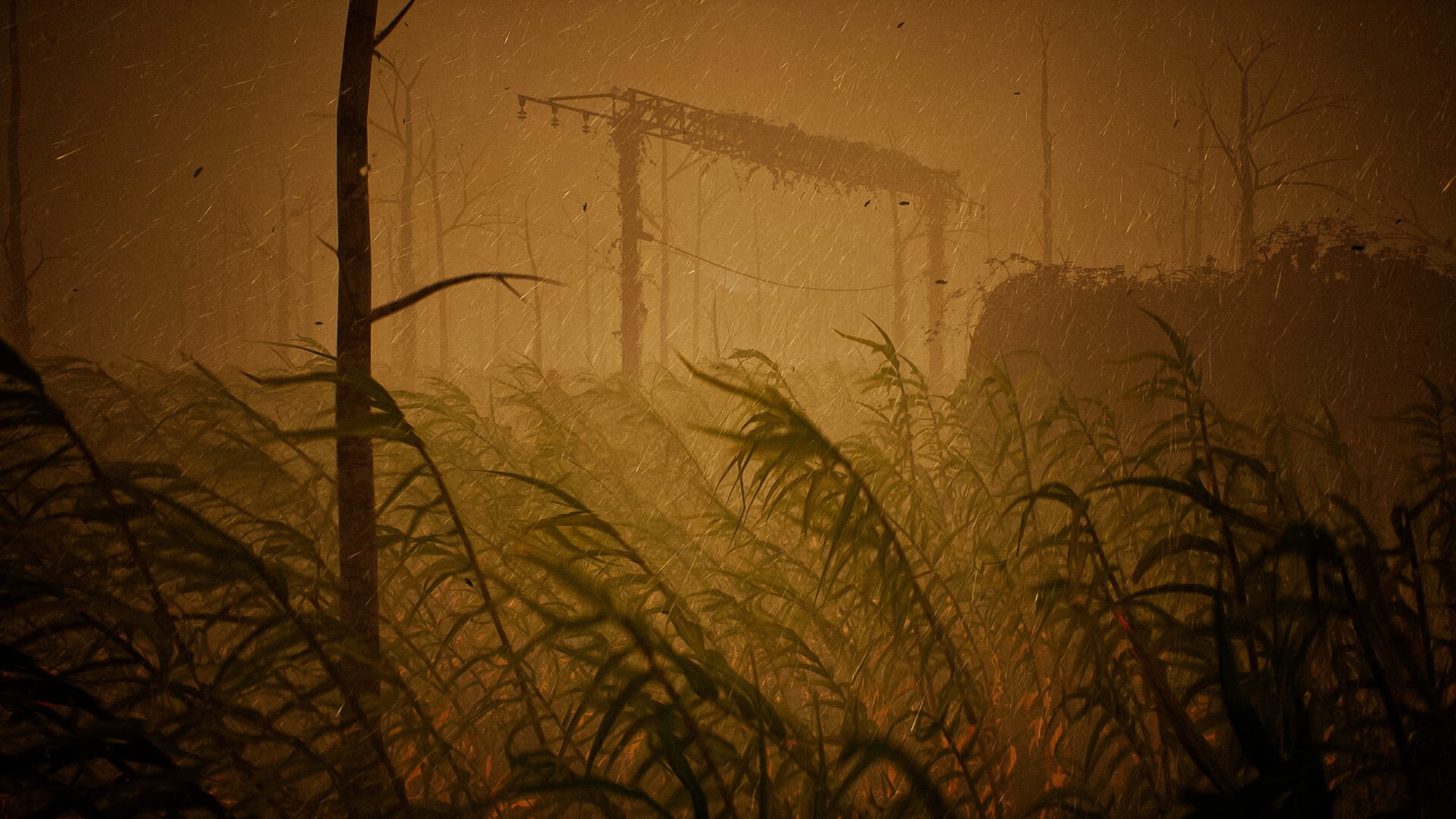
In Outfield, the predator does not need to see you to kill you. It hears movement, gunfire, and environmental disturbances across the tall grass. Visual stealth still helps — tall grass breaks sightlines — but audio is the primary stealth system. This guide explains how to move, when to make noise on purpose, and how day/night plus weather rewrite those rules every run.
If you have not installed yet, read Getting Started for loop basics, then return here before your next run. Pair this page with Controls so crouch, walk, and interact bindings are automatic under stress.
Core rule: noise equals location data
Think of every action as broadcasting a blip:
- Footsteps through grass scale with speed and surface wetness
- Gunshots and reloads are loud, sharp events
- Scarecrow destruction is a deliberate XP trade that spikes noise
- Weather dampens or scatters how far those blips travel
The enemy uses that information to close distance. You rarely get a fair face-to-face duel in open daylight; you get a rush from an angle you did not audio-check. Winning means choosing when the hunter learns where you are.
Movement discipline in tall grass
Tall grass hides your silhouette but not your sound profile. Default habits from other shooters will grief you:
Walk by default. Sprint only when you have already accepted that the hunter may pivot. If you sprint toward a scarecrow, you pay movement noise and destruction noise back-to-back.
Pause and listen at field edges. Night runs especially punish continuous movement because you cannot visually confirm safe lanes. A two-second listen tells you whether to reroute before committing.
Avoid retracing the same path late in a run. The enemy evolves over time; repeated routes become predictable even if each trip felt quiet individually.
For scarecrow timing that respects noise budgets, see Scarecrow and XP.
Your one gun as a sound tool
You carry a single firearm — every shot is both damage and detection. Use these tiers mentally:
- Silent repositioning — no shots, relocate after a scarecrow break
- Controlled scarecrow kill — one burst, then move
- Emergency stop — fire to create space knowing you have given away position
Reloading counts. Reload in cover pockets with visual breaks, not in open rows where night vision already hurts you. Upgrade choices that reduce reload frequency or muzzle noise belong in Upgrades and Builds; post-launch rankings appear on the Tier List.
Rain: when the world gets quieter
Rain masks sound according to store descriptions and demo impressions. Practically, that means:
- Your footsteps may travel less far, enabling bolder repositioning
- Enemy approach may be harder to hear, increasing jump-scare risk
- Gunfire may still cut through rain — do not assume weather makes you invisible
Rain is not a permanent stealth mode. It is a window to break scarecrows or cross dangerous gaps. Plan exits before the weather shifts mid-run. Track whether patches change rain values in Updates.
Night: vision down, ears up
Night reduces vision. You see less grass lane detail and rely on silhouettes and audio. Night strategies:
- Shorter movement segments with listen breaks
- Memorize landmarks during day phases if the cycle alternates
- Avoid long-range shots you cannot visually confirm — missed shots still make noise
Combine night with rain and you get the highest information deficit in the game. That is when conservative XP pacing from Scarecrow and XP saves runs you would otherwise throw away.
Enemy evolution and pressure
Within a single run, the hunter evolves. Early phases may forgive exploratory noise; later phases tighten response to repeated blips. Signs you are overdue for a rotation:
- Encounters happen soon after you enter a sector you already cleared
- Audio cues feel closer even when you are walking, not sprinting
- Scarecrow breaks trigger faster follow-ups than earlier in the run
When pressure spikes, stop farming and pivot objectives. Upgrades that help kiting or noise mitigation are listed in Upgrades and Builds.
Practical drill for improving
Run this checklist three times in a row:
- Enter a field edge and listen five seconds before moving.
- Break one scarecrow, then relocate without sprinting unless chased.
- Note whether rain or night changed your confidence level.
- After death, write down the last sound you made before contact.
Most players discover they died after a reload in the open or a double scarecrow greed chain. Fixing one habit per run beats reading ten generic horror tips.
Wiki cross-links
- Getting Started — first-run overview
- Scarecrow and XP — noise budget for farming
- Upgrades and Builds — picks that support stealth
- Controls — bindings for walk, crouch, aim
- Tools — printable route cards
- Updates — hearing radius patch notes
- Official Links — Steam page and announcements
Return to the Guides hub when you want the full reading order.
Frequently Asked Questions
Quick answers to the most common questions.
Does the Outfield enemy use sight or sound?
The core threat hunts primarily by sound. Tall grass affects visibility, but audio discipline is the main stealth system.
Does rain make me silent in Outfield?
Rain masks sound rather than removing it. Footsteps may be harder to detect, but gunfire and scarecrow breaks still alert the enemy.
Why is night harder if I can hide in grass?
Night reduces vision, so you confirm fewer threats visually. You must rely on listening, which punishes careless movement.
Should I sprint between scarecrows?
Usually no. Sprinting spikes footstep noise and pairs badly with loud scarecrow breaks. Walk, break, relocate.
Do upgrades reduce noise?
Some random upgrades likely support stealth or mobility. See Upgrades and Builds and the Tier List after launch for confirmed picks.
Where do I report audio bugs?
Use Steam discussions and watch Updates for verified patch fixes. Official Links lists the store page for reporting.